Child safety in the vehicle
After three years of active campaigning and raising awareness towards the use of child restraints, it is now law that all children under 1,5 m must be in an age appropriate child restraint.
More Info
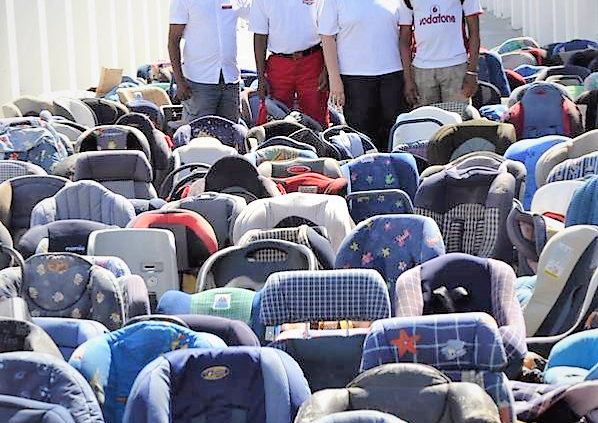
Do you have a unwanted child restraint?
Did you know that it might just save another child’s life.
Drive More Safely started the campaign in 2012 and this campaign has given car seats to more than 7000 kiddies to date.
Please donate your old car seat or if you are in need of a car seat, please contact us.
- The National Road Traffic Act was amended to require all drivers transporting children under 3 years old to strap them into a car seat when travelling in vehicles. This new law which came into effect on 1 May 2015, coincides with the third United Nations Global Road Safety Week (4-10 May 2015), which this year focuses on children and road safety, and what we can do to keep our children protected on our roads.Seat belts and car seats are important because they:
As a parent, it’s important for you to:
- Find a car seat that fits your child.
- As children grow, how they sit in your car will change. Make sure the car seat you buy is designed to fit your child’s current size and age.
- Make sure that the car seat is the right fit for your vehicle.
- Not all car seats fit in all vehicles. Test the car seat you plan to buy to make sure it fits well in your vehicle.
- Read your car’s manual, the label on the seat belt and the instructions on the car seat itself, to make sure you use the car seat correctly.
- Choose the right direction (rear- or forward-facing).
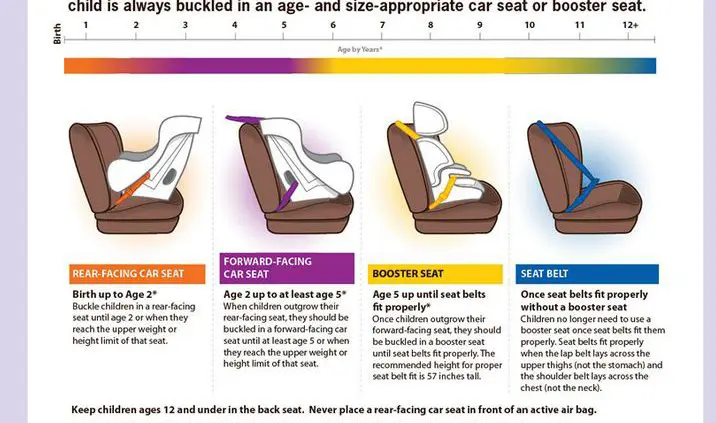
Kids who sit in rear-facing car seats have the best protection for the head, neck and spine. It is especially important for rear-facing children to ride in a back seat, away from the airbag.
- Infants (birth to 1 year): if your child is younger than 1 year and/or weighs less than 9kg, they should sit in a rear-facing seat with the harness straps at shoulder level.
- Toddlers (up to 4 years): if your child is older than 1 year and/or weighs 10kg or more, they can sit in forward-facing seats, with the harness straps at their reduce the seriousness of injuries, prevent the child from being ejected from the vehicle in a crash, and prevent injury to other occupants (an unbuckled child could be catapulted forward in a crash, injuring front seated passengers).
- Young children(4-12 years): if your child weighs more than 18kg they can sit in a front-facing booster seat, which must be used with both the lap and shoulder belt securely fastened. Make sure the lap belt fits below and tight across the lap/upper thigh and that the shoulder belt fits snugly across the chest and shoulder. This will help avoid abdominal injuries.
- For the best protection, keep your baby in a rear-facing car seat for as long as possible – at least until about 2 years old (look for the exact height and weight limit on the side or back of your car seat).Booster seats are best used only when a child has outgrown a safety seat.Note: Booster seats raise the seating position of the child so that the adult seat-belt lies properly across the chest, crossing diagonally at the child’s shoulder rather than the neck, and low across the pelvis. Also, always ensure that you keep the booster seat on the back seat of the car.
4. Take the next step to a booster seat when you answer “yes” to any of these questions:
- Does your child exceed the car seat’s height or weight limits?
- Are your child’s shoulders above the car seat’s top harness slots?
- Are the tops of your child’s ears above the top of the car seat? Booster seats are best used only when a child has outgrown a safety seat. Note: Booster seats raise the seating position of the child so that the adult seat-belt lies properly across the chest, crossing diagonally at the child’s shoulder rather than the neck, and low across the pelvis. Also, always ensure that you keep the booster seat on the back seat of the car.If you must use a second-hand seat, make sure it has the original instructions (or contact the manufacturer for a replacement copy), has all its parts (check the manual), has never been involved in a serious accident, and hasn’t been recalled.
Five common car seat installation mistakes:
- Wrong harness slots used: For rear-facing seats, be sure to use the slots located at or below the child’s shoulders. For front-facing seats use the slots located at or above the child’s shoulders.
- Wrong chest clip position:The correct position is at armpit level. It should never be positioned above the child’s stomach.
- Loose car seat (after installation): The seat should be securely fastened and not be able to move around.
- Loose harness strap:There should be no slack when you pinch the strap at the child’s shoulders.
- Improper seatbelt placement:The lap belt should lie snugly across the upper thighs, and not the stomach. The shoulder belt should lie snugly across the shoulder and chest, and not the neck or face.
Note: Remember that the best car seat is the one that fits your child, your car and is easy to use correctly and safely all the time.